A pioneer in his field, Dr Pang invented two of the world’s most successful palate surgery procedures to treat snoring and sleep apnea: the Anterior Palatoplasty and the Expansion Sphincter Pharyngoplasty. He also recently introduced the Sleep Goal Index, a novel holistic framework for assessing outcomes in sleep apnea interventions.
In Obstructive Sleep Apnea, collapse of the upper airway is usually multi-level: at the level of the nose, velopharynx (palate), base of tongue, and/or the lateral (side) pharyngeal walls.
Many patients with OSA have bulky lateral (side) pharyngeal walls that vibrate and contribute to the collapse of the upper airway. In imaging studies, lateral (side) pharyngeal muscle wall collapse has been demonstrated to be important in the pathogenesis of OSA.
Up to 2007, most would concur that it is difficult to surgically create adequate lateral pharyngeal wall tension to prevent its collapse. The traditional sleep apnea surgery would be the UvuloPalatoPharyngoplasty (UPPP), a procedure focussed primarily on cutting away soft tissue or the palate.
In 2007, Dr Kenny Pang invented the Expansion Sphincter Pharyngoplasty, a palate-positioning technique that successfully created the necessary tension in the lateral pharyngeal walls to prevent collapse and reduce the number of apneic episodes.
In the clinical trial to follow, by Dr Pang and Tucker Woodson (Medical College Wisconsin, USA), the Pang and Woodson (2007) results for the two patient groups, The Pang’s Expansion Group, and The UvuloPalatoPharyngoplasty (UPPP) Group yielded success rates of 82.6% in the Pang’s Expansion Group compared to 68.1% in the traditional UPPP group (p<0.05).
It is significant, that the Pang’s Expansion Pharyngoplasty was superior in terms of treatment results.
The procedure marked a significant milestone in sleep medicine, shifting the international paradigm of sleep surgery from destructive tissue removal to reconstructive muscle repositioning.
Since then, the Pang’s Expansion Sphincter Pharyngoplasty is taught in medical sleep surgery courses globally where Dr Pang has taught over 1000 ENT surgeons in the past 2 decades.
Notably, extensive international meta-analyses spanning over 17 years have shown that the technique maintains an 80%+ long-term success rate in the reduction of sleep apnea episodes and achieving beneficial patient treatment outcomes.
It was specifically designed to treat obstructive sleep apnea (OSA) and severe snoring.
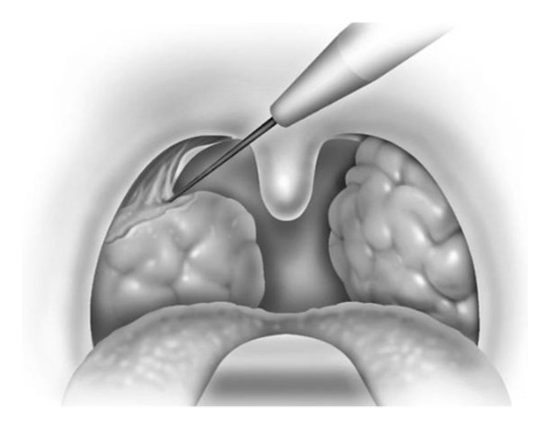
The Expansion Pharyngoplasty is akin to a “facelift” for the inside of the throat. Dr Kenny Pang’s technique isolates the palatopharyngeus muscle (the lateral wall muscle), rotates it anteriorly, laterally, and superiorly, and sutures it into a new position. This pulls the throat upward and outward, stiffening and expanding the airway so it cannot collapse at night.

Tonsillectomy is performed.
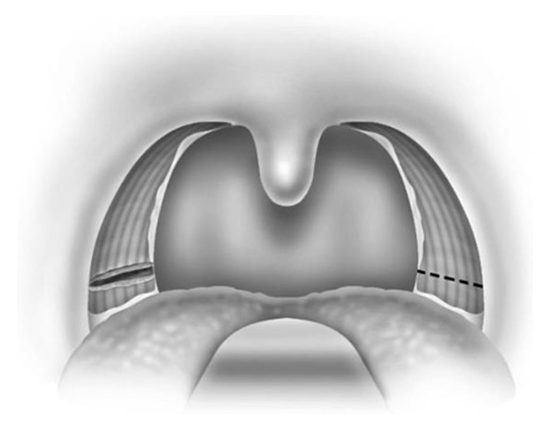
Horizontal incision made to divide the inferior end of the palatopharyngeus muscle.
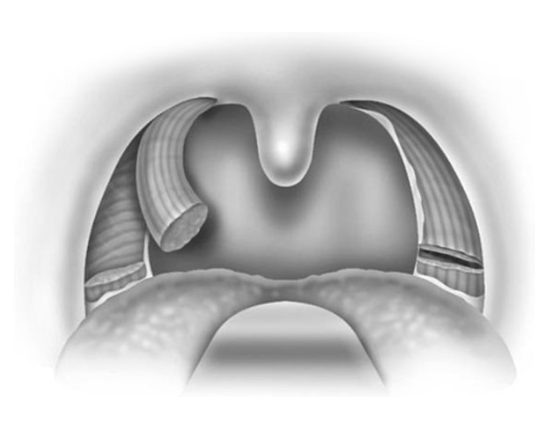
The palatopharyngeus muscle is mobilized, not completely, being careful to leave its fascia attachments to the deeper horizontal constrictor muscles.
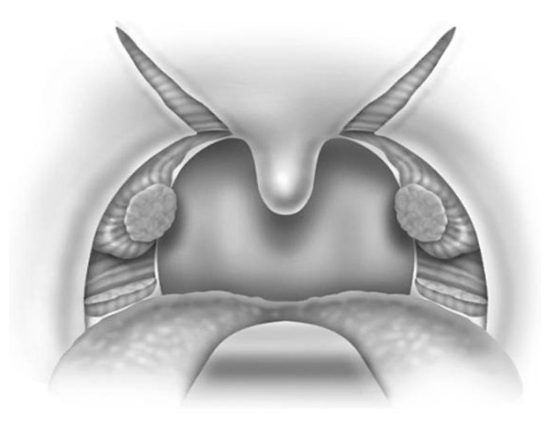
Superolateral incision made on the soft palate, revealing the arching fibers of the soft palate muscles.
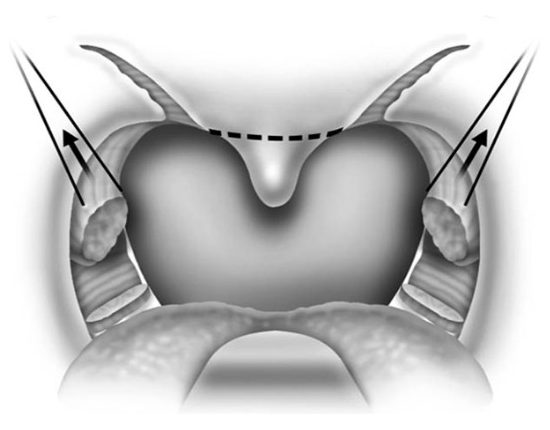
Vicryl sutures used to hitch up the palatopharyngeus muscle to soft palate muscles superolaterally.
The Expansion Pharyngoplasty is akin to a “facelift” for the inside of the throat. Dr Kenny Pang’s technique isolates the palatopharyngeus muscle (the lateral wall muscle), rotates it anteriorly, laterally, and superiorly, and sutures it into a new position. This pulls the throat upward and outward, stiffening and expanding the airway so it cannot collapse at night.

Tonsillectomy is performed.

Horizontal incision made to divide the inferior end of the palatopharyngeus muscle.

The palatopharyngeus muscle is mobilized, not completely, being careful to leave its fascia attachments to the deeper horizontal constrictor muscles.

Superolateral incision made on the soft palate, revealing the arching fibers of the soft palate muscles.

Vicryl sutures used to hitch up the palatopharyngeus muscle to soft palate muscles superolaterally.
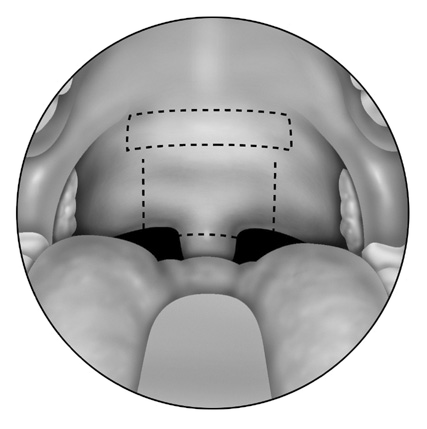
The Anterior Palatoplasty was invented by Dr Kenny Pang in 2006. The Anterior Palatoplasty works by advancing the soft palate and the uvula forwards anteriorly. It opens up and widens the space behind the soft palate, also known as the velopharyngeal space or the retro-palatal space. The Anterior Palatoplasty is performed for patients with a narrow retro-palatal space / velopharyngeal space. It pulls the soft palate forwards and widens the oro-pharyngeal space to allow better breathing and less obstructions during sleep apnea. Studies have shown that it has less pain and shorter recovery time.

Showing schematic incisions for the Anterior Palatoplasty
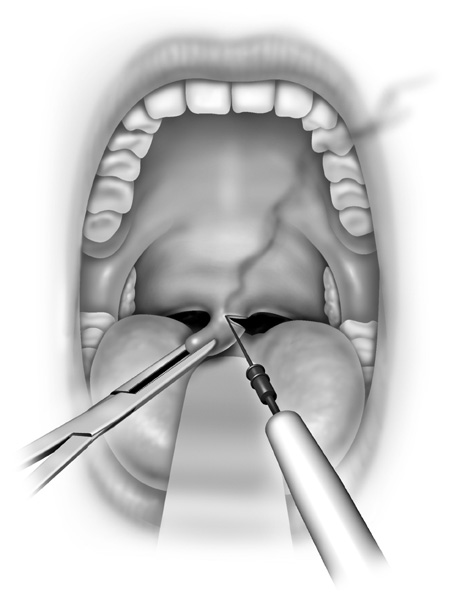
Showing the trimming of the uvula
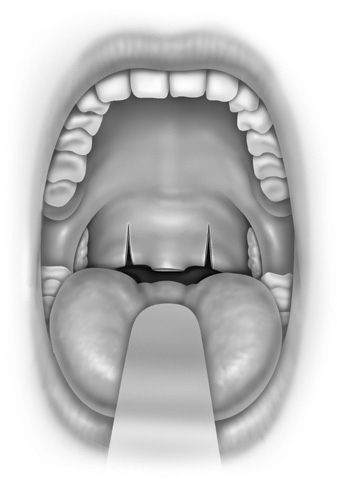
Showing the division of the posterior webs of the palate arches
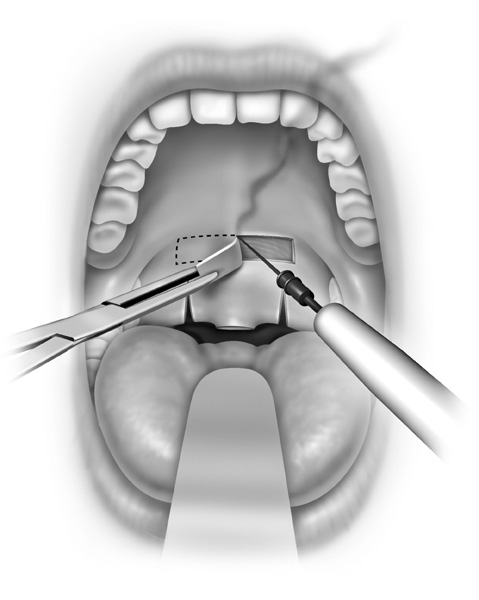
Removing the mucosa rectangular box on the front surface of the soft palate
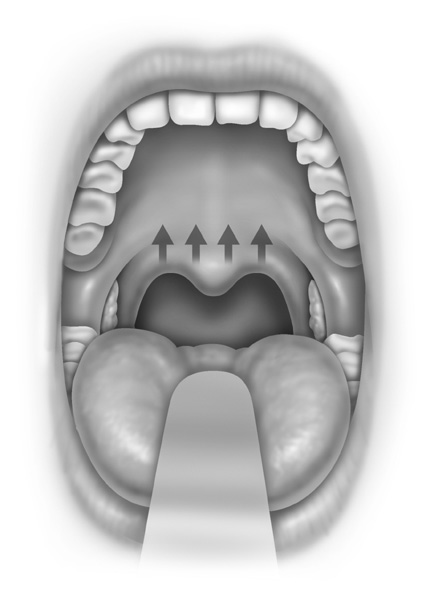
Final end result, a nice superior/upward increase in the airway space
by Dr Kenny Pang et al.
For Sleep Physicians/Specialists to assess treatment success rates
A comprehensive and holistic clinical metric comprising Blood Pressure (BP), Body Mass Index (BMI), Oxygen levels (T90), and Apnea Hypopnea Index (AHI) to evaluate treatment outcomes and success rate in Obstructive Sleep Apnea (OSA).
References: